


Cinnamon Farming
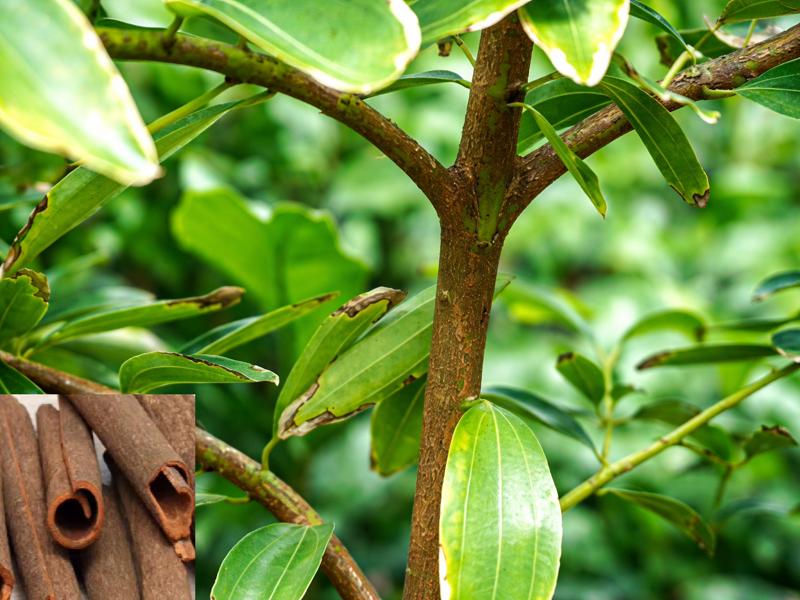
🌿 How to Grow Cinnamon? Cost, Profit and Complete Information
Cinnamon farming is becoming very popular in India as an emerging spice crop. It is in high demand not only for household use but also in the medicinal industry, cosmetic industry, and export market. The aromatic bark of cinnamon, oil extracted from leaves, and its medicinal properties make it a profitable cash crop for farmers.
This blog is specially written for rural farmers, so that they can easily understand Cinnamon Farming | Dalchini Ki Kheti and earn good profit per acre.
In this article, you will get complete information related to cinnamon farming such as climate, soil, varieties, seed rate, fertilizer, irrigation, pest and disease control, harvesting, yield, market price, government schemes, and FAQs.
🌱 1. Crop Introduction
Cinnamon is an evergreen spice crop, and its botanical name is Cinnamomum verum. It is mainly grown for its aromatic bark. In India, cinnamon farming is mainly done in Kerala, Karnataka, Tamil Nadu, and Western Ghats regions.
👉 Cinnamon Farming | Dalchini Ki Kheti is a long-duration crop, but once established, it gives continuous income for many years.
Main Uses
✔ As a spice
✔ In Ayurvedic medicines
✔ In soap, perfume, and cream industry
✔ For cinnamon oil and leaf oil
❤️ 2. Health Benefits of Cinnamon
Cinnamon is not just a spice, it is also a natural medicine.
Major Health Benefits
✔ Helps in diabetes control
✔ Improves digestion
✔ Beneficial in cold and cough
✔ Supports heart health
✔ Increases immunity
✔ Useful in toothache and bad breath
✔ Gives relief in joint pain
✔ Helpful in urinary infections
👉 Consuming cinnamon with honey is considered very beneficial in Ayurveda.
🌿 3. Scientific Classification
| Classification Level | Scientific Name |
|---|---|
| Kingdom | Plantae |
| Class | Magnoliopsida |
| Order | Laurales |
| Family | Lauraceae |
| Genus | Cinnamomum |
| Species | Cinnamomum verum |
This scientific classification helps farmers and students to understand Cinnamon Farming | Dalchini Ki Kheti better.
☀️ 4. Climate and Temperature Required
Cinnamon farming requires a tropical climate.
Climate Requirements
✔ Annual Rainfall: 200 to 250 cm
✔ Temperature: 20 to 32°C
✔ Humidity: High humidity is best
👉 Frost-prone areas are not suitable for cinnamon farming.
🌱 5. Soil Requirement
Soil selection is very important for Cinnamon Farming | Dalchini Ki Kheti.
Suitable Soil
✔ Sandy loam soil
✔ Rich in organic matter
✔ Well-drained soil
Soil pH
✔ 5.5 to 6.5
👉 Avoid waterlogged land for cinnamon cultivation.
🌱 6. Seed and Varieties
Choosing the right variety is very important in Cinnamon Farming | Dalchini Ki Kheti, as yield, oil content, quality, and market price depend on the variety. In India, scientifically developed and certified varieties are available which give better yield and profit.
🌿 6.1 Propagation Methods of Cinnamon
✔ By cuttings
✔ By air layering
✔ By seed-grown plants
👉 Important Note:
Plants grown from seeds do not give uniform quality, so cuttings and air layering plants are best for commercial farming.
🌱 6.2 Major Varieties Developed by Indian Research
🌿 6.2.1 Navashree Variety
Navashree is a high-quality and high-oil variety, very good for commercial farming.
Main Features
✔ Bark oil: 2.7%
✔ Bark cinnamaldehyde: 73%
✔ Bark oleoresin: 8%
✔ Leaf oil: 2.8%
✔ Leaf eugenol: 62%
Yield Capacity
✔ Around 56 kg dry bark per hectare per year
✔ About 22–23 kg dry bark per acre
Suitable Areas
✔ Kerala
✔ Karnataka
✔ Tamil Nadu
✔ Western Ghats hilly regions
🌿 6.2.2 Nithyashree Variety
This variety is very useful for oil production and industrial use.
Main Features
✔ Bark oil: 2.7%
✔ Bark cinnamaldehyde: 58%
✔ Bark oleoresin: 10%
✔ Leaf oil: 3%
✔ Leaf eugenol: 78%
Yield Capacity
✔ Around 54 kg dry bark per hectare per year
✔ About 21–22 kg dry bark per acre
Special Use
✔ Cinnamon oil industry
✔ Perfume and cosmetic industry
🌿 6.2.3 Konkan Tej Variety
This variety is developed by Konkan Agricultural University and is famous for oil extraction.
Main Features
✔ Total oil content: 3.2%
✔ Cinnamaldehyde: 70.23%
✔ Eugenol: 6.93%
Uses
✔ Bark oil
✔ Leaf oil
Suitable Areas
✔ Konkan region
✔ Coastal areas of Maharashtra
🌱 6.3 Plant Preparation by Cuttings
✔ Take 10 cm long cutting with two leaves
✔ Select softwood branch
✔ Dip in IBA 200 ppm or rooting hormone
✔ Plant in sand + coconut coir mixture
✔ Keep in shade
✔ Light irrigation 2–3 times daily
👉 Strong roots develop in 45–60 days.
🌱 6.4 Plant Preparation by Air Layering
✔ Select semi-mature branch
✔ Remove bark ring
✔ Apply IBA 2000 ppm or IAA 2000 ppm
✔ Cover with moist coconut coir
✔ Tie with plastic sheet
👉 Roots develop in 40–60 days.
🌱 6.5 Plant Preparation by Seeds
✔ Collect fully ripe fruits from June to August
✔ Remove pulp and clean seeds
✔ Sow immediately
✔ Use sand, soil, and FYM mixture
✔ Germination in 15–20 days
👉 Seed-grown plants show more variation, so they are less used for main farming.
🌱 6.6 Plants Required per Acre
✔ Pits per acre: about 150
✔ Plants per pit: 3–4
✔ Total plants per acre: 450–500
🌿 6.7 Benefits of Right Variety Selection
✔ Higher yield
✔ Better bark quality
✔ Higher oil percentage
✔ Better market price
✔ Export-quality produce
🌱 7. Seed Rate
In Cinnamon Farming | Dalchini Ki Kheti, seed rate is directly related to plant population and yield.
Cinnamon is generally not grown directly from seeds. Mostly, plants are raised from:
✔ Cuttings
✔ Air layering
✔ Nursery plants
Key Points
✔ Plants per acre: 450–500
✔ Spacing: 3 m × 3 m
✔ Plants per pit: 3–4
✔ Plant age at planting: 10–12 months
✔ Plants should be healthy and well-rooted
👉 Proper seed rate and spacing ensure good growth and better bark quality.
🚜 8. Land Preparation
Steps of Land Preparation
✔ Deep ploughing
✔ Weed removal
✔ Pit size: 50 cm × 50 cm × 50 cm
Spacing: 3 m × 3 m
Manure per Pit
✔ 20 kg FYM or compost
👉 Cinnamon can also be grown as an intercrop in coconut gardens.
🌱 9. Sowing Method
9.1 Best Time for Planting
✔ June to July is best
✔ Planting at monsoon start gives natural moisture
✔ Avoid planting in dry season
9.2 Selection of Planting Material
✔ 10–12 months old healthy plants
✔ Disease-free, green leaves
✔ Good root system
9.3 Plant Population per Acre
✔ 450–500 plants
✔ 3–4 plants per pit
9.4 Planting Method
✔ Use prepared pits
✔ Mix topsoil with FYM
✔ Place plant upright
✔ Do not bend roots
✔ Press soil lightly
9.5 Care After Planting
✔ Light irrigation immediately
✔ Avoid waterlogging
✔ Provide partial shade for first 2–3 years
✔ Protect from strong sun and wind
9.6 Special Tips
✔ Can be grown in coconut plantations
✔ Maintain 2 m distance from coconut trees
✔ Ensure good drainage on sloping land
🌾 10. Fertilizer and Manure Management
First Year (per plant)
✔ FYM: 5 kg
✔ Nitrogen: 20 g
✔ Phosphorus: 18 g
✔ Potash: 25 g
After 1 Year (per plant)
✔ FYM: 20 kg
✔ Nitrogen: 200 g
✔ Phosphorus: 180 g
✔ Potash: 250 g
👉 Apply fertilizers in two equal splits during May–June and September–October.
💧 11. Irrigation Schedule
✔ Rainfed crop
✔ First 2–3 years: irrigation twice a week
✔ Maintain moisture during summer
👉 Excess water can be harmful.
🌿 12. Weed Control
✔ Weeding every 30–45 days
✔ Two major cleanings per year
✔ Mulching is beneficial
🐛 13. Pest and Disease Management
Timely control of pests and diseases in Cinnamon Farming | Dalchini Ki Kheti is very important, otherwise yield and quality are affected.
🔴 13.1 Major Diseases
13.1.1 Leaf Spot and Dieback Disease
Cause: Fungus Colletotrichum gloeosporioides
Symptoms
✔ Dark brown spots on leaves
✔ Spots merge and become irregular
✔ Leaves dry
✔ Infection reaches stem causing dieback
Control
✔ Prune infected branches
✔ Spray 1% Bordeaux mixture
✔ 200 liters water per acre
✔ Repeat every 10–15 days
13.1.2 Seedling Blight Disease
Cause: Diplodia fungus in nursery
Symptoms
✔ Light brown spots around stem
✔ Seedlings dry and die
Control
✔ Spray 1% Bordeaux mixture
✔ Avoid waterlogging
✔ 200 liters water per acre
13.1.3 Brown Blight Disease
Cause: Pestalotia palmarum fungus
Symptoms
✔ Small brown leaf spots
✔ Grey center, dark brown edges
Control
✔ Spray 1% Bordeaux mixture
✔ Remove infected leaves
✔ 200–250 liters water per acre
🐜 13.2 Major Pests
13.2.1 Cinnamon Butterfly
✔ Appears after monsoon
✔ Larvae eat young leaves
Control
✔ Spray 0.05% Quinalphos
✔ 200 liters water per acre
13.2.2 Leaf Miner
✔ Common in nursery during monsoon
✔ Blister-like marks on leaves
Control
✔ Spray 0.05% Quinalphos
✔ 200–250 liters water
✔ Two sprays at 10-day interval
13.2.3 Other Pests (Caterpillars, Beetles)
Control
✔ Spray 0.05% Quinalphos
✔ Organic option: Neem oil 3 ml per liter
✅ 13.3 Integrated Pest Management Tips
✔ Avoid waterlogging
✔ Regular weeding
✔ Remove diseased plants
✔ Use balanced fertilizers
✔ Avoid excessive chemicals
⏳ 14. Crop Duration
Cinnamon is a long-duration crop.
✔ Total crop life: 20–25 years
✔ First harvest: After 5 years
✔ Harvest interval: Every 2 years
✔ Best quality after: 4–5 years
👉 Proper harvesting, pruning, and nutrition give long-term stable income.
✂️ 15. Harvesting Method
✔ First harvest after 5 years
✔ Best time: September to November
✔ Select branches of 1.5–2.0 cm thickness
✔ Bark should peel easily
✔ Cut branches near ground
✔ Remove leaves
✔ Peel bark same day
✔ Dry 1 day in shade, then 3–4 days in sun
✔ Grade as per quality
✔ Harvest every 2 years
👉 Proper harvesting gives better quality and price.
📦 16. Yield per Acre
✔ Dry bark: 25–30 kg per acre per year
✔ Bark oil: Around 1 kg per acre
💰 17. Market Price and Profit per Acre
✔ Dry cinnamon price: ₹600–₹900 per kg
✔ Estimated income: ₹20,000–₹30,000 per acre
✔ Net profit: ₹15,000–₹22,000 per acre
👉 Profit increases more with oil extraction.
🏪 18. Storage
Proper storage maintains quality and market value.
✔ Store dry bark in cool, dry, ventilated place
✔ Keep above floor on wooden planks
✔ Use jute or cloth bags
✔ Avoid plastic bags
✔ Check stored produce regularly
👉 Good storage = Better price + Less loss + More profit
🏛️ 19. Government Schemes
✔ National Horticulture Mission
✔ Spices Board subsidy
✔ Subsidy on planting material and drip irrigation
👉 Contact nearest agriculture office for details.
❓ FAQs | Frequently Asked Questions
Best area for cinnamon farming?
Tropical regions with 200–250 cm rainfall.
When does profit start?
First harvest after 5 years, then income every 2 years.
Plants per acre?
450–500 plants per acre.
Main risk?
Waterlogging and poor disease management.
Intercropping possible?
Yes, with coconut and arecanut.
Market demand?
Always high in spice, Ayurvedic, cosmetic, and export markets.
Water requirement?
Rainfed crop, irrigation needed in early years.
Use of cinnamon oil?
Soap, perfume, cream, toothpaste, medicines.
Is organic farming possible?
Yes, and it gives better price.
How to store cinnamon?
Store fully dried bark in moisture-free, ventilated place.
🌟 Conclusion
Cinnamon Farming | Dalchini Ki Kheti is a long-term and sustainable income source for farmers. With the right variety, scientific farming practices, and market knowledge, this crop can strengthen the financial condition of rural farmers.
👉 If you are looking for a low-risk and long-term profitable crop, definitely adopt cinnamon farming.
🌿 Best wishes for successful farming 🌿
👉 For more detailed and practical information on spice farming, click here.
Reference Source: