


Capsicum Farming
Capsicum Farming: How to Earn Higher Profits with Low Investment
Capsicum farming holds a very important place among vegetable crops. Capsicum, commonly known as Shimla Mirch, is an improved variety of chili that is mainly used as a vegetable. It is also known as Green Pepper, Sweet Pepper, and Bell Pepper in different regions.
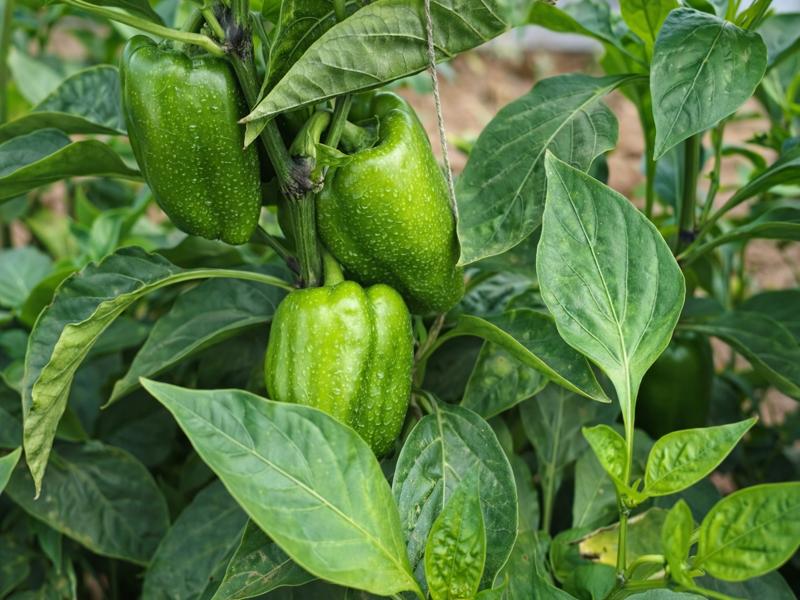
Unlike normal chili, capsicum is completely different in shape and pungency. Its fruits are thick, fleshy, juicy, and bell-shaped. Some fruits appear slightly bulged while others look pressed inward—this unique structure is its main identity.
Capsicum is one of the most important commercial vegetable crops in India. It is widely used in curries, pickles, chutneys, and almost all types of vegetable dishes. The origin of capsicum is believed to be Mexico, and it was introduced to India in the 17th century.
This crop is rich in medicinal and nutritional properties. Capsicum is available in the market in green, red, and yellow colors. Regardless of color, it contains a high amount of Vitamin C, Vitamin A, and Beta Carotene, making it highly beneficial for health.
India is among the leading countries in chili production worldwide. In India, Capsicum Farming is mainly practiced in Madhya Pradesh, Andhra Pradesh, Maharashtra, Karnataka, Odisha, Tamil Nadu, Bihar, Uttar Pradesh, and Rajasthan.
Capsicum is a versatile vegetable crop that can be successfully grown in open fields, shade net houses, and greenhouses. It belongs to the Solanaceae family, and the plant height reaches up to 75 centimeters.
Average yield in open fields ranges from 83 to 165 quintals per acre, while under greenhouse conditions, production can increase up to 415 to 500 quintals per acre.
1. Health Benefits of Capsicum
1.1 Boosts Immunity
Capsicum contains a high amount of Vitamin C, which strengthens the immune system and helps protect the body from infections.
1.2 Good for Eye Health
The presence of Vitamin A and Beta Carotene supports better eyesight and overall eye health.
1.3 Supports Heart Health
Antioxidants found in capsicum help reduce the risk of heart-related diseases.
1.4 Improves Digestion
Good fiber content improves digestion and keeps the digestive system strong.
1.5 Helps in Weight Management
Low calories and high nutrients make capsicum ideal for a healthy diet and weight control.
2. Scientific Classification of Capsicum
- Kingdom – Plantae
- Division – Angiosperms
- Class – Dicotyledonae
- Order – Solanales
- Family – Solanaceae
- Genus – Capsicum
- Species – Capsicum annuum
3. Climate & Temperature Required for Capsicum Farming
Capsicum farming performs best in a moderate climate.
3.1 Suitable Temperature
- For crop growth: 21 to 25°C
- For seed germination: 12 to 15°C
- During harvesting: 30 to 35°C
3.2 Rainfall Requirement
- Ideal rainfall: 625 to 1500 mm
- Waterlogging is harmful and should be strictly avoided.
4. Soil Requirement for Capsicum Farming
- Sandy loam soil is considered best
- Clay loam to loam soil is also suitable
- Proper drainage system is essential
- Soil pH: 6 to 7
- Soil temperature: 18 to 35°C
Healthy soil directly impacts yield and fruit quality in capsicum farming.
5. Seed & Varieties of Capsicum
5.1 Bomby Red
- Early maturing variety
- Fruit weight: 130 to 150 grams
- Turns red after ripening
- Suitable for long storage
- Yield: 90 to 110 quintals per acre
5.2 Orobelle Yellow
- Suitable for cold climate
- Thick yellow fruits
- Average fruit weight: 150 grams
- Good disease resistance
- Yield: 100 to 120 quintals per acre
5.3 Indra Green
- Bushy and strong plants
- Deep green fruits
- Average fruit weight: 170 grams
- Harvesting starts in 50 to 55 days
- Yield: around 110 quintals per acre
Other Popular Varieties
- California Wonder
- Chinese Giant
- World Beater
- Yolo Wonder
- Arka Mohini
- Arka Gaurav
- Arka Basant
- Early Giant
- Bullnose
- King of North
- Ruby King
6. Seed Rate for Capsicum Farming
- Seed quantity: 200 to 400 grams per acre
- Plant population: Around 20,000 to 25,000 plants per acre
7. Land Preparation
- Plough the field 5 to 6 times
- Make soil loose and friable
- Apply 20 to 25 tons of well-decomposed farmyard manure per acre
- Level the field properly before transplanting
8. Sowing and Transplanting Method in Capsicum Farming
Proper sowing time and scientific transplanting methods ensure healthy plants and significantly increase per-acre production.
8.1 Nursery Sowing Time
Capsicum seedlings are first raised in a nursery.
- Kharif crop: June to July
- Rabi crop: August to September
- Early crop: November to December
8.2 Nursery Sowing Method
- Soak seeds in clean water one day before sowing
- Rub seeds lightly by hand for cleaning
- Treat seeds with fungicide
- Thiram or Captan: 2 grams per kg of seed
- Sow seeds in rows, not by broadcasting
- Cover seeds with a light layer of soil
- Provide light irrigation immediately
This method ensures good germination and healthy seedlings.
8.3 Transplanting Time
Seedlings become ready for transplanting in 45 to 50 days.
- Seedling height: 10 to 15 cm
- Number of leaves: 4 to 5 healthy leaves
- Suitable months:
- July to August
- September to October
- December to January
8.4 Transplanting Method
- Irrigate the nursery one day before transplanting
- Carefully remove seedlings to avoid root damage
- Evening transplanting is more beneficial
- Light irrigation after transplanting is essential
8.5 Spacing in Capsicum Farming
Correct spacing ensures better growth and higher yield.
- Row-to-row distance: 60 cm
- Plant-to-plant distance: 30 cm
- Same spacing is followed in the double-row system
8.6 Sowing and Transplanting Depth
- Seed sowing depth: 2 to 4 cm
- Transplant seedlings deep enough so roots are fully covered with soil
8.7 Early Capsicum Farming Using Tunnel Method
The tunnel method is highly effective for early capsicum production.
- Practiced during December to February
- Row-to-row distance: 130 cm
- Plant-to-plant distance: 30 cm
- Fix 45 to 60 cm long sticks in the field
- Cover with 100-gauge plastic sheet
- Remove the sheet in February when temperature becomes normal
This method gives early yield and better market prices.
8.8 Pit Method of Transplanting
In some regions, capsicum farming is done using pit planting.
- Pit depth: 10 to 15 cm
- Mix farmyard manure in pits before transplanting
- Provide light irrigation after planting
9. Fertilizer Management in Capsicum Farming
Proper fertilizer management plays a key role in achieving healthy plants, higher yield, and better fruit quality in Capsicum Farming. A balanced use of organic and chemical fertilizers keeps the soil fertile and supports long-term productivity.
9.1 Organic Manure
- Farmyard manure (FYM) or vermicompost
- Quantity: 20 to 25 tons per acre
Organic manure improves soil structure, increases water-holding capacity, and promotes beneficial microorganisms.
9.2 Chemical Fertilizers (Per Acre)
- Nitrogen (N): 50 kg
- Phosphorus (P): 25 kg
- Potash (K): 12 kg
9.3 Method of Application
- Apply the full dose of phosphorus and potash before transplanting
- Apply nitrogen in two split doses:
- First dose after 30 days
- Second dose after 55 days
This method ensures proper nutrient availability at different growth stages.
10. Irrigation Schedule in Capsicum Farming
Water management directly affects flowering, fruit size, and yield.
- Light irrigation after seed sowing
- Immediate irrigation after transplanting
- Regular irrigation until plants are well established
- Later, irrigate at an interval of 7 to 10 days
- Drip irrigation is the most beneficial method
Drip irrigation saves water, maintains uniform soil moisture, and improves yield quality.
11. Weed Control
Weeds compete with crops for nutrients, water, and sunlight, so timely control is essential.
- First weeding after 30 days
- Second weeding after 60 days
- Earthing up after 2 to 3 weeks
Regular weeding helps in better root development and healthy plant growth.
12. Pest & Disease Management in Capsicum Farming
If pests and diseases are not controlled on time, they directly affect both yield and quality. Excessive use of chemical pesticides increases cost and reduces soil fertility. Therefore, organic and integrated pest management (IPM) is considered the safest and most profitable approach.
12.1 Major Insect Pests and Organic Control Measures
1. Aphid
Symptoms
- Leaves start curling
- Plant becomes weak
- Sticky substance appears on leaves
Organic Control
- Spray neem oil 3 to 5 ml per liter of water
- Neem-based pesticide (Azadirachtin 1500 ppm) 2 ml per liter
- Protect beneficial insects like ladybird beetles
2. Thrips
Symptoms
- Leaves turn silvery
- Flowers and fruits become deformed
Organic Control
- Garlic and green chili extract
- 50 g garlic + 50 g green chili per liter of water
- Regular neem oil spray
- Use 8 to 10 blue sticky traps per acre
3. White Fly
Symptoms
- Leaves turn yellow
- High risk of viral diseases
Organic Control
- 10 to 12 yellow sticky traps per acre
- Neem oil 5 ml per liter of water
- Proper weed control in the field
4. Fruit Borer
Symptoms
- Holes in fruits
- Fruits rot from inside
Organic Control
- 8 to 10 pheromone traps per acre
- Bacillus thuringiensis (BT) 1 g per liter of water
- Remove and destroy infected fruits
12.2 Major Diseases and Organic Control
1. Wilt Disease
Symptoms
- Sudden wilting of plants
- Leaves turn yellow and dry
Organic Control
- Seed treatment with Trichoderma 5 g per kg seed
- Mix Trichoderma 2.5 kg per acre with farmyard manure
- Ensure proper field drainage
2. Leaf Spot Disease
Symptoms
- Brown or black spots on leaves
- Leaves slowly dry up
Organic Control
- Spray 10% cow urine solution
- Apply neem cake 100 kg per acre to soil
- Remove infected leaves
3. Powdery Mildew
Symptoms
- White powder-like layer on leaves
- Plant growth slows down
Organic Control
- Wettable sulfur 2 g per liter of water
- Spray 10% buttermilk solution
- Maintain proper plant spacing and air circulation
12.3 Integrated Organic Pest Management (IPM)
- Neem cake 100 kg per acre
- Regular use of Trichoderma
- Conservation of beneficial insects
- Balanced fertilizer management
- Crop rotation
- Immediate removal of infected plants
12.4 Important Precautions for Organic Spraying
- Spray in the morning or evening
- Maintain a gap of 7 to 10 days between sprays
- Do not spray before rainfall
- Always filter the solution before spraying
- Avoid unnecessary and excessive spraying
12.5 Benefits of Organic Pest Control
- Soil fertility remains intact
- Safe and chemical-free produce
- Lower cultivation cost
- Better market price
- Long-term sustainable farming
13. Crop Duration in Capsicum Farming
- First harvesting: 60 to 70 days
- Total crop duration: 90 to 120 days
14. Harvesting Method
- Harvest immature green fruits for best quality
- Fruits should be tender and crispy
- Regular harvesting increases total yield
15. Yield per Acre
- Normal farming: 40 to 50 quintals
- With improved technology: 80 to 120 quintals
- In greenhouse conditions: 400 to 500 quintals
16. Market Price & Profit in Capsicum Farming
- Average market price: ₹20 to ₹50 per kg
- Total income: ₹80,000 to ₹2,00,000 per acre
- Net profit: ₹50,000 to ₹1,50,000 per acre
17. Storage
- 7 to 10 days at normal temperature
- Longer storage at 7 to 8°C
- Ideal humidity: 85 to 90%
18. Government Schemes for Capsicum Farming
- Pradhan Mantri Krishi Sinchai Yojana
- National Horticulture Mission
- Greenhouse subsidy schemes
- Subsidy on drip irrigation systems
These schemes help farmers reduce initial investment and adopt modern farming techniques.
19. Frequently Asked Questions (FAQs)
Q1. Which climate is best for Capsicum Farming?
Cool to mildly warm climate is ideal. Plant growth and yield are best at 21 to 25°C.
Q2. How much seed is required for one acre?
About 200 to 400 grams of certified, disease-free seed is sufficient.
Q3. Which soil is suitable for Capsicum Farming?
Sandy loam soil with good drainage is best. Soil pH should be 6 to 7.
Q4. When should seedlings be transplanted from the nursery?
When seedlings are 45 to 50 days old with 4 to 5 leaves.
Q5. When does the first harvesting start?
First harvesting begins 60 to 70 days after transplanting.
Q6. What is the average yield per acre?
Open-field farming gives 40 to 50 quintals, while improved methods give 80 to 120 quintals per acre.
Q7. Is organic Capsicum Farming profitable?
Yes, organic farming has lower costs, higher market price, and maintains soil fertility.
Q8. What are the major pests in capsicum cultivation?
Aphids, thrips, white flies, and fruit borers are the main pests.
Q9. Why is drip irrigation important?
Drip irrigation saves water, ensures uniform moisture, and increases yield by 20 to 30%.
Q10. What government support is available?
Financial support is available under schemes like the National Horticulture Mission, drip irrigation subsidy, and greenhouse subsidy.
Conclusion
Capsicum Farming is a highly profitable and low-risk vegetable crop for farmers. With the right variety selection, scientific cultivation practices, balanced fertilizer use, and timely irrigation, farmers can achieve high yield and better profits per acre. This crop plays an important role in increasing farmers’ income and promoting sustainable agriculture.
👉 For more detailed and practical information on vegetable farming, click here.
Reference Source: